
Alexander County Probate Records Office
Probate in Alexander County is not a separate county court office. The Clerk of Superior Court acts as Ex Officio Judge of Probate. The North Carolina Judicial Branch explains that clerks handle probate of wills, administration of estates of decedents, minors, and incompetent persons, adoptions, guardianship determinations, partitions of land, and trust administration. In practice, this means estate filings, many special proceedings, and probate copy requests route through the same courthouse office that maintains Superior Court and District Court files.
The North Carolina estates help topic says a will has no legal effect until probated, usually by the clerk of superior court.
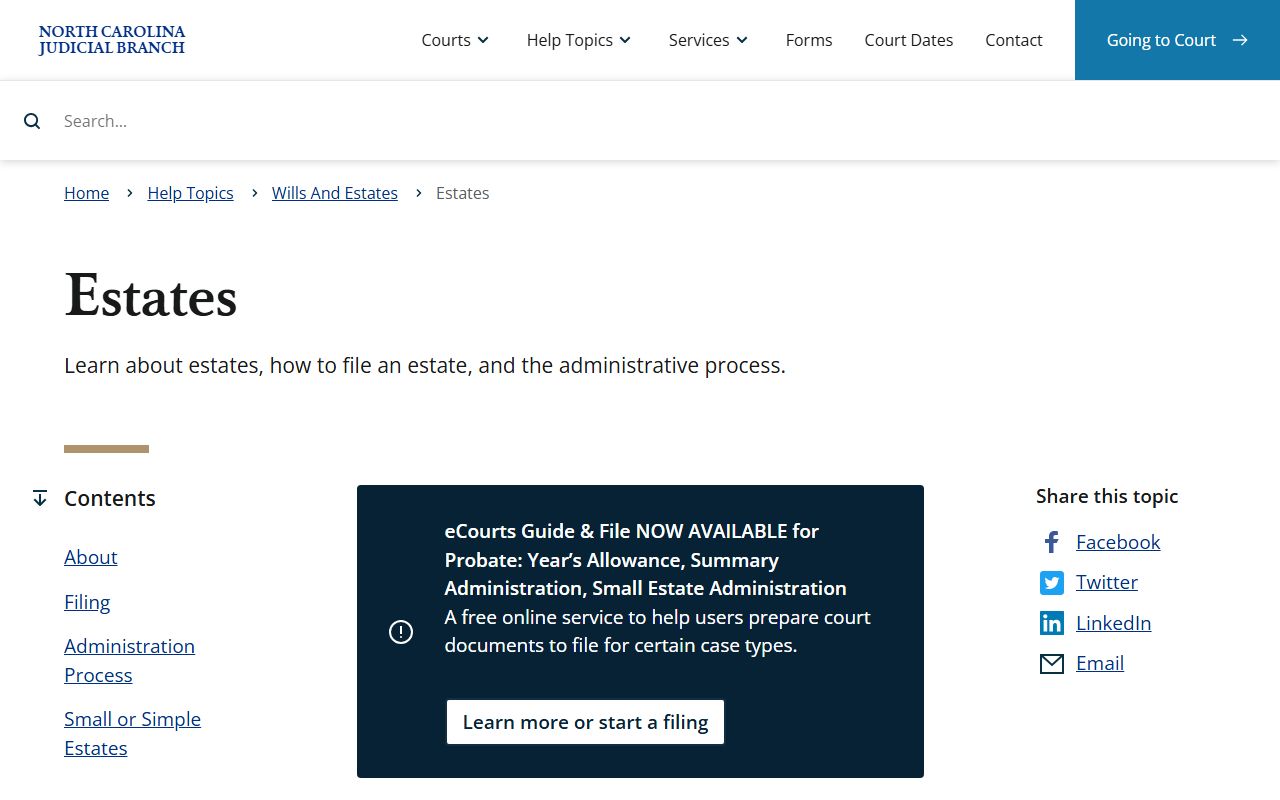
That state explanation fits Alexander County because the Clerk of Superior Court is the local probate official.
Alexander County Clerk of Superior Court
Probate role: Ex Officio Judge of Probate
29 W. Main Ave.
Taylorsville, NC 28681
Mailing: PO Box 100, Taylorsville, NC 28681
(828) 635-3113
Monday-Friday, 8:00 a.m.-5:00 p.m.
Alexander County Probate Terms
Probate words can be dense, but the key terms show who died, who is asking to act, and what the clerk is being asked to approve. The same words appear in Alexander County estate forms, eCourts entries, clerk copy requests, and notices to heirs or creditors.
- Testator
- The person who made a will.
- Executor
- The person named in a will to carry out estate duties after appointment.
- Administrator
- A person appointed to handle an estate when there is no will or no executor can serve.
- Intestate
- Dying without a valid will that controls the probate estate.
- Guardianship
- A proceeding where the clerk or court appoints someone to act for a minor or incompetent adult.
- Conservatorship
- A property-management concept often used in other states; in North Carolina, estate and guardianship forms use local terms, so confirm the correct form with the clerk.
The court officials page describes the clerk's probate duties in North Carolina.
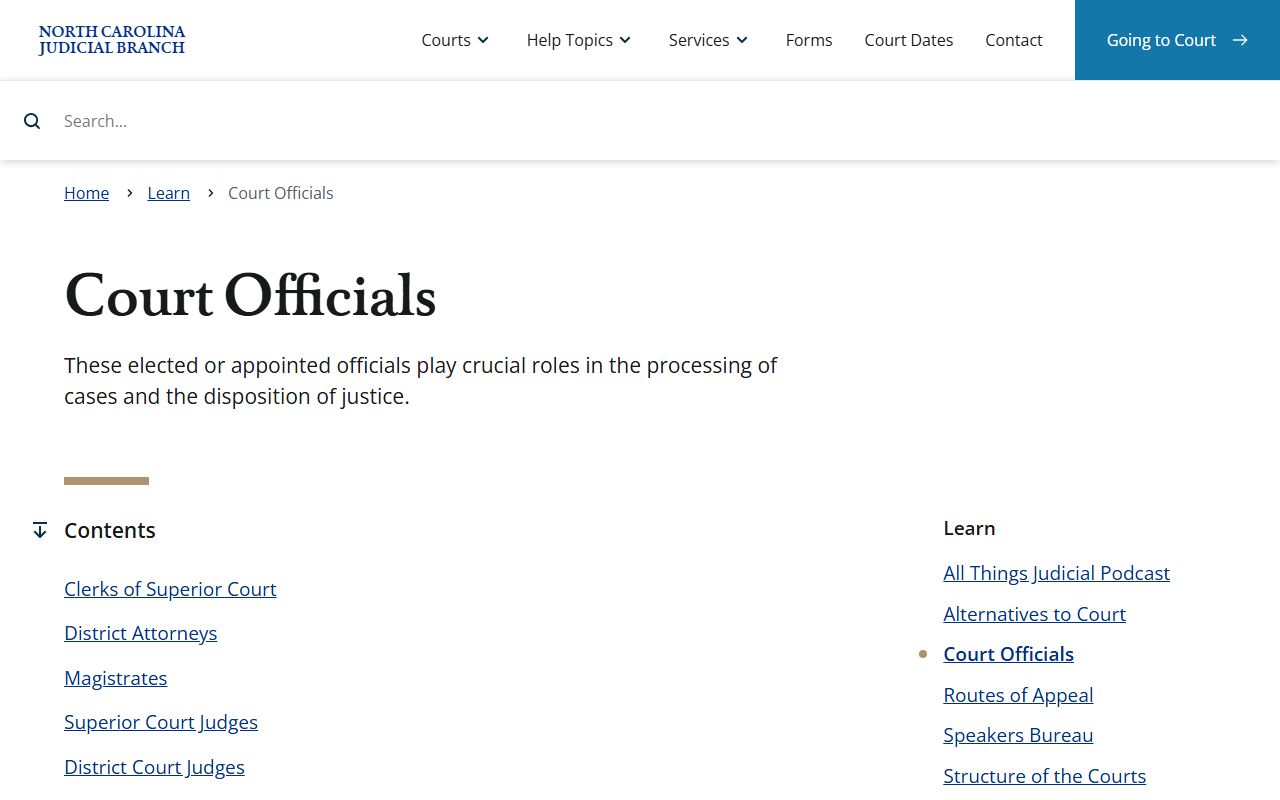
The clerk duties shown there explain why Alexander County probate records are filed with the Clerk of Superior Court.
What Alexander County Probate Covers
Estate administration starts when property does not pass directly outside probate. Some assets transfer by survivorship, beneficiary designation, or another non-probate path. If assets must be administered, the clerk appoints a personal representative to collect assets, give notice to creditors, pay valid debts, account to the clerk, and distribute the remaining property to heirs or beneficiaries.
Probate assets often include vehicles, bank accounts, stocks, bonds, furniture, and jewelry. Non-probate assets may include life insurance, retirement accounts, joint bank accounts, annuities, and property with right of survivorship. Land and houses are not always administered through the probate estate unless the will says so or a sale is needed to pay debts. Filed wills become public after death and filing, and any person may view or request a copy of that public will record for a fee.
| Estate item | How it may appear | Record path |
|---|---|---|
| Filed will | Probated will, caveat, or related order | Clerk probate file |
| Letters | Letters testamentary or administration | Clerk appointment record |
| Inventory | Asset list and values | Estate file |
| Creditor notice | Notice and claims activity | Docket and file entries |
| Guardianship | Appointment and status filings | Special proceeding or related file |
Start Alexander County Probate
Before filing, gather facts about the decedent, the will, assets, debts, and venue. Venue is usually the county where the decedent was domiciled. The research also notes a small estate option in North Carolina tied to personal property value, surviving-spouse status, and a waiting period after death. Because estate forms and thresholds can update, users should check current Judicial Branch forms and confirm the current procedure with the Alexander County Clerk of Superior Court before filing.
- Locate the original will, if one exists.
- Obtain a certified death certificate.
- Identify probate and non-probate assets, debts, and likely heirs or beneficiaries.
- Contact the Alexander County Clerk of Superior Court to confirm the correct estate form, fee, and appointment procedure.
- File in the county with proper venue, usually the decedent's domicile county.
- After appointment, inventory assets, give creditor notice, pay valid debts, file accountings, and distribute property as allowed.
Note: A small estate affidavit may fit some personal-property estates, but the current threshold must be checked against current North Carolina forms.
Search Alexander County Probate Records
Alexander County probate records can be checked through more than one channel. The North Carolina eCourts Portal may show estate or special proceeding case information where available. If the online record is incomplete, older, restricted, or requires a certified copy, the clerk's office remains the main file-inspection and copy channel in the county where the estate is located.
Search requests work best with the decedent's full legal name, date of death, estate file number if known, and the document needed. A will copy, letters, inventory, accounting, or order may have different fee and certification needs. The Judicial Branch forms page is the statewide source for estate forms, while current court-cost PDFs list estate costs and miscellaneous copy charges.
| Field label | Type | Use in Alexander County probate records |
|---|---|---|
| Decedent name | Text | Primary lookup field for estate search or copy request. |
| Estate file number | Text | Helpful when assigned by the clerk or eCourts. |
| Personal representative | Text | Executor, administrator, collector, or affiant if appointed. |
| Date of death | Date | Useful for identifying the correct estate and filing proof. |
| Will status | Concept | Testate with a will or intestate without one. |
| Asset inventory | Form category | Assets, values, liens, and accountings in administration. |
For older estate files, a name search alone may not be enough. Bring a date of death, approximate filing year, spouse or heir names, and any known executor or administrator name. If a person only needs proof that a will was filed, ask for the will or probate order. If the request involves authority to act for the estate, ask about letters testamentary, letters of administration, or the current appointment document. Certified copies should be requested when the record will be used with a bank, title company, agency, or court.
Alexander County Probate Fees
Probate filing fees and copy fees are controlled by current North Carolina court-cost schedules, not by a local county-created price list. The research identifies the official current court-cost publications and the court costs help topic as the proper fee source. The clerk can confirm the exact amount owed for a new estate filing, certified copy, or special proceeding before a person mails payment or appears at the courthouse.
| Probate item | Verified fee source or rule |
|---|---|
| Estate filing costs | Current North Carolina Estates Court Costs schedule |
| Certified court copies | Charged as prescribed by law and current court-cost schedules |
| Plain court copies | Per-page fee under current miscellaneous court-cost rules |
| Indigent petition | Judicial Branch court costs topic explains fee-waiver process |
| Mail payment | Contact clerk first for amount and acceptable payment method |
The Judicial Branch court costs help topic is the current public fee source for Alexander County probate records users.
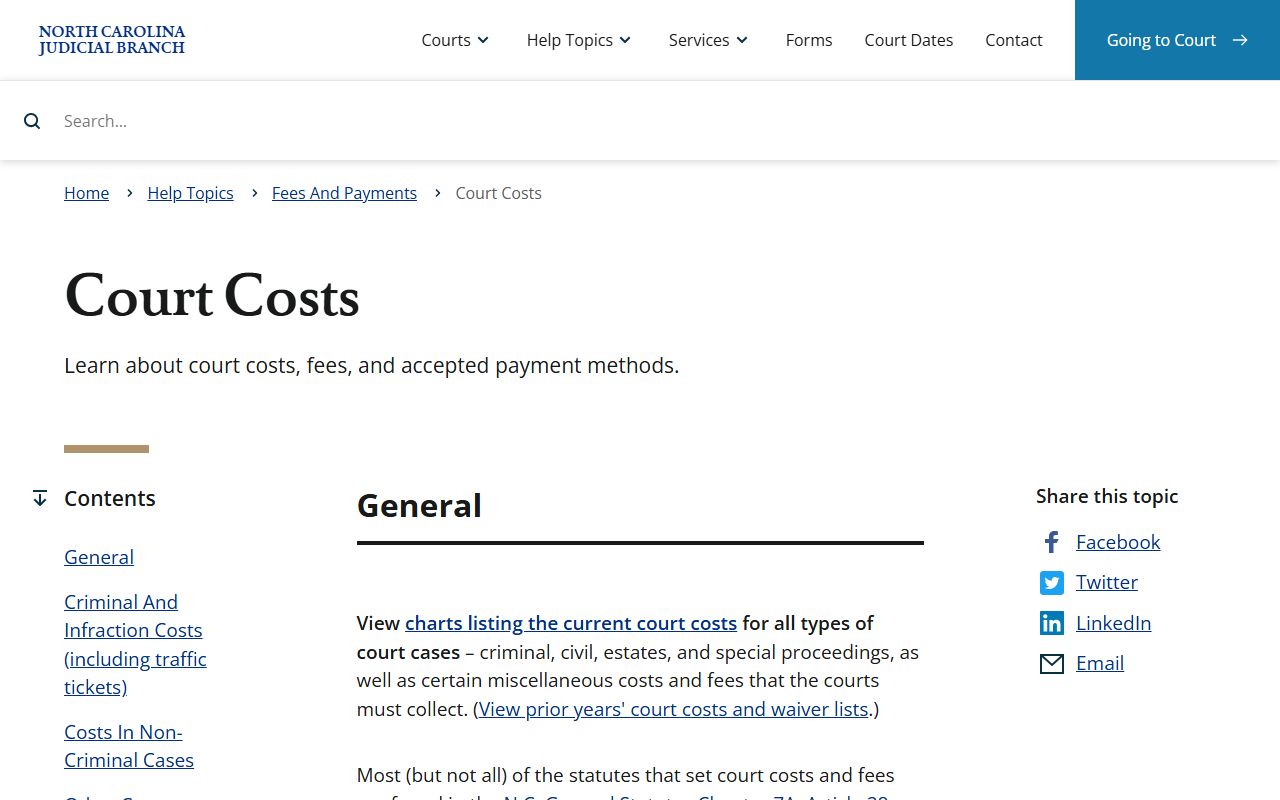
Use that source before mailing a probate filing or paying for certified estate copies.
Payment method should be confirmed before sending anything by mail. The Alexander County court payment research says mail payments to court use money order or certified check, with no cash and no personal checks. Probate copy requests may need a self-addressed envelope, the case number or decedent name, and a clear statement about whether the copy must be certified. If the amount is uncertain, call the clerk first rather than guessing.
Restricted Alexander County Probate Records
Filed wills become public after death and filing, but not every probate-related record is open in the same way. Guardianship, incompetency, adoption, minor-related matters, medical information, account numbers, protected addresses, and sealed documents may be limited, redacted, or available only by court order. The clerk can often provide public portions while withholding confidential material.
Probate users should also avoid confusing Register of Deeds records with probate files. Deeds, deeds of trust, satisfactions, cancellations, plats, assumed names, powers of attorney, marriage licenses, birth records, and death records route to the Register of Deeds. Estate files, special proceedings, guardianships, and probate copies route to the Clerk of Superior Court. That local office split is one of the most important Alexander County record distinctions.
A death certificate is usually a vital record rather than a probate record. In Alexander County, certified vital copies come from the Register of Deeds only for records that office holds, and some birth or death events may be held by another county or by the state office. The probate file may show that a certified death certificate was used to open an estate, but that does not mean the clerk issues replacement vital certificates. For estate authority, use the clerk. For the certificate itself, use the vital-record custodian.