
Alexander County Arrest Records and Charges
Alexander County arrest records are created on the law-enforcement and custody side. They may connect to the Sheriff's Office, the Detention Center, bond information, arrest date, arresting agency, and current charges shown in a jail or Police-to-Citizen record. They are not the same as a final criminal conviction.
Court charge records begin when the prosecutor or criminal process moves the accusation into court. The District Attorney for Prosecutorial District 32 controls prosecution after law enforcement starts or files charges. The court record can show the charge name, statute, count, level, pending status, dismissal, reduction, plea, judgment, sentence, or appeal. For the complete case file and outcome, use Alexander County criminal court records.
Find Alexander County Arrest Records and Charges
The arrest side and the court-charge side use different access channels. Current custody and booking data may appear through the Sheriff's P2C inmate catalog or the Detention Center. Formal charges and charge status should be checked through the eCourts Portal, public terminals, or the Alexander County Clerk of Superior Court.
- Check the Sheriff's custody channel when the question is current jail status, bond, or booking detail.
- Open the North Carolina eCourts Portal when the question is the court charge, case number, hearing, or disposition.
- Search by defendant name or known case number, then narrow to Alexander County where the statewide portal allows.
- Read each charge separately because one arrest can produce multiple counts with different outcomes.
- Contact the Clerk of Superior Court for certified copies, older files, or court records not available online.
- Use state offender searches only for state prison, probation, parole, SAVAN, or registry data, not as a county court file.
The state offender search channel is documented by the N.C. Department of Adult Correction offender searches.
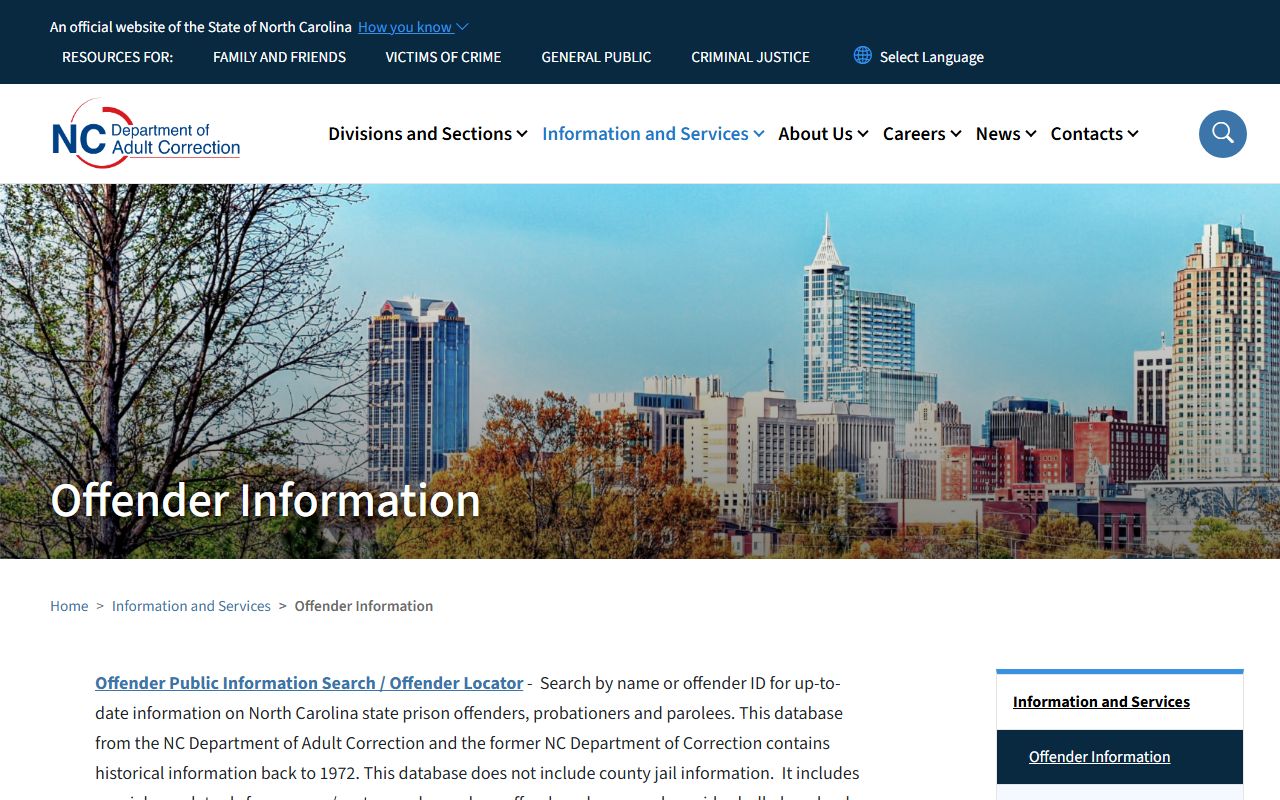
That source is useful for statewide custody and supervision checks, but it does not replace Alexander County court charge records.
Charges After Arrest Documents
Charges after arrest can reach court through different criminal-process documents. North Carolina court records may show a warrant, summons, indictment, information, or other filing depending on offense level and procedural stage. The label matters because it hints at how the case entered court.
| Complaint or Warrant | Information | Indictment | |
|---|---|---|---|
| Usual source | Law enforcement, magistrate, or prosecutor-backed criminal process. | Prosecutor-filed accusation when allowed by law. | Grand jury accusation, most important for felony Superior Court cases. |
| Common use | Initial charge, arrest process, misdemeanor, or preliminary criminal matter. | Formal prosecution path where indictment is not the chosen route. | Felony prosecution and serious charges moving in Superior Court. |
| Record effect | Can create early court dates, bond entries, and charge lines. | Can define the filed charge and count structure. | Can move the felony case into the Superior Court record. |
| What to verify | Charge, date, bond, court date, and later disposition. | Filed count, statute, plea, disposition, and sentence. | Indicted offense, count number, amendments, trial or plea result. |
Alexander County Charge Status
Charge status changes as the case moves. A charge can start as pending, be amended, be reduced, be dismissed, be resolved by plea, or end in a not guilty finding. A court charge record should be read by count because one count can be dismissed while another ends in a conviction.
| Status | What It Means |
|---|---|
| Pending | The charge is filed or active, but no final disposition has been entered for that count. |
| Amended | The filed charge was changed, often by statute, class, count detail, or description. |
| Reduced | The charge was changed to a lower offense or lesser level as part of court action or plea negotiation. |
| Dismissed | The court record shows the charge did not proceed to conviction under that count. |
| Not guilty | The charge was tried or adjudicated without a guilty finding. |
| Guilty or responsible | The record shows a conviction, responsibility finding, or plea outcome for that count. |
Charge vs Conviction
A charge is not proof of guilt. It is the State's allegation or criminal count. A conviction is a court outcome. Alexander County arrest records can list a current charge before court review, while the court charge record later shows whether that charge stayed pending, changed, was dismissed, or became a conviction.
| Charge | Conviction | |
|---|---|---|
| Stage | Accusation after arrest, warrant, summons, indictment, or filing. | Final or qualifying court outcome by plea, verdict, or judgment. |
| Can change | Yes. It can be amended, reduced, added, or dismissed. | Less often. Changes usually require later court action, appeal, or expunction. |
| How it appears | Charge name, statute, class, count, and pending status. | Disposition, sentence, costs, probation, jail, restitution, or other judgment terms. |
| How to verify | Check the court case after the arrest date. | Read the disposition and sentence fields, then confirm with the clerk if needed. |
Who Files Alexander County Charges
Law enforcement may initiate an arrest, seek a warrant, or provide facts for a charge, but the District Attorney controls prosecution in court. Prosecutorial District 32 covers Alexander and Iredell counties. The N.C. Conference of District Attorneys directory names Sarah Kirkman as the District Attorney for District 32, and the Judicial Branch local directory lists the District Attorney phone as (704) 832-6610.
District attorneys represent the State in criminal matters filed in District and Superior Courts, prepare the criminal trial docket, advise local law enforcement, and supervise assistant district attorneys and victim witness staff. Victim impact statement or prosecution-status questions should go to the DA office rather than the clerk.
Arrest Records vs Jail Custody
The Alexander County Sheriff's Office is at 91 Commercial Park Ave., Taylorsville, NC 28681, phone (828) 632-1111. The Detention Center is adjacent to the Law Enforcement Center and lists detention phone (828) 632-0304. The Sheriff's detention page links to "View Who is in the Alexander County Jail" through the P2C inmate catalog.
The P2C inmate catalog can show current custody fields such as name, age, race, sex, arrest date, court date, charges, bond type, bond status, bond amount, release fields, and booking or arresting agency where enabled. That is a custody tool. Court charges after arrest must still be checked in the court case record for formal status and disposition.
Bond is set by a judicial official after arrest. A secured bond can be satisfied by full cash bond to the Clerk of Superior Court, Alexander County real property as security, or a bondsman. If a property bond exceeds $2,500, detention staff require a current Alexander County Tax Statement showing no tax levies unless waived by the magistrate or clerk.
Statewide Charge and Offender Lookups
Statewide criminal data can help, but it answers a different question. The N.C. Department of Adult Correction offender search includes state prison offenders, probationers, parolees, historical information back to 1972, SAVAN, and sex offender registry links. It does not include county jail data and does not serve as the full court case file.
North Carolina's public records law still controls many access questions. Chapter 132 defines public records and inspection rights, while court, juvenile, and expunction statutes limit what appears in public searches.
Sealed or Expunged Charge Records
Restricted charge records do not follow the same public access path as ordinary adult criminal cases. Juvenile delinquency and undisciplined records are governed by G.S. 7B-3000. Abuse, neglect, and dependency records are withheld from public inspection under G.S. 7B-2901 unless a court order or statute permits access.
| Sealed | Expunged | |
|---|---|---|
| Public access | Hidden from ordinary public inspection by law or court order. | Removed from public record entries as directed by an expunction order. |
| Common charge impact | The case may exist, but the public cannot inspect the record without authority. | Public checks should not disclose the expunged arrest, charge, or conviction entry. |
| North Carolina law | Chapter 7B protects juvenile and abuse, neglect, dependency records. | G.S. 15A-146 and G.S. 15A-145.5 cover key criminal expunction paths. |
| Next step | Ask the clerk what order, form, or statute controls access. | Review eligibility and file in the county court case if the statute applies. |
Juvenile court record limits are stated in G.S. 7B-3000.
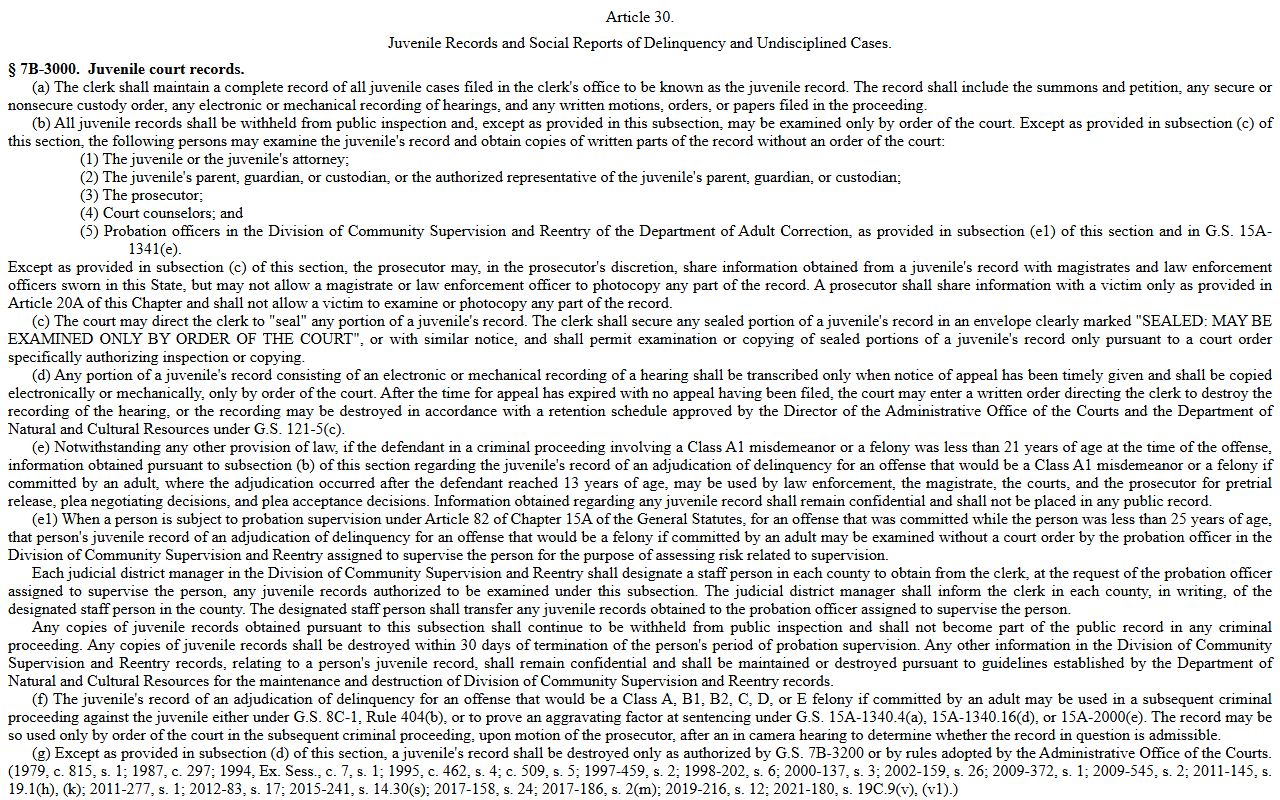
That statute is a key reason juvenile charge records should not be treated like ordinary adult criminal court records.
Abuse, neglect, and dependency confidentiality appears in G.S. 7B-2901.
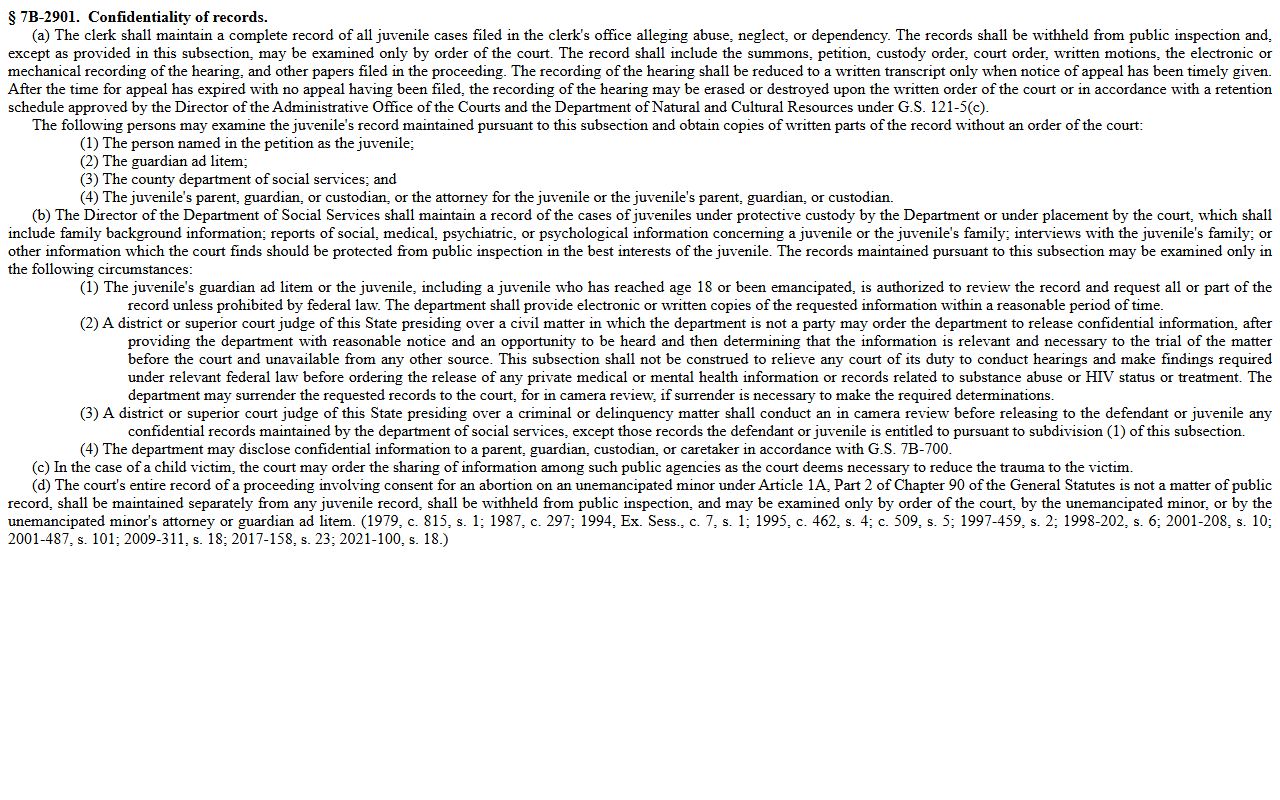
That restriction is separate from adult arrest records and should be handled through the clerk or court order process.
Background Check Limits
Portal, P2C, DAC, and clerk searches can each show part of the record. None should be blended into a single unverified conclusion. A current arrest may not have a filed case. A filed charge may be dismissed. A conviction may later be expunged if a statute allows it and the court grants relief.
Important: Verify the exact person, case number, charge status, and disposition before relying on any arrest or charge record.
Note: The safest court-charge confirmation is the Alexander County case record or a clerk-certified copy.