
Alexander County Criminal Court Records
A criminal court record begins when the court file is opened or a criminal process is filed. It is broader than an arrest record. The case file can show the charges filed by the State, the court division, hearings, motions, pleas, disposition, judgment, sentence, costs, bond entries, probation conditions, and appeal activity.
Alexander County criminal cases are part of North Carolina's unified General Court of Justice. District Court generally handles misdemeanors, infractions, first appearances, probable cause proceedings, and preliminary matters. Superior Court handles felony prosecutions, felony indictments, larger criminal proceedings, and appeals from District Court. The Clerk of Superior Court keeps records for both divisions.
The Judicial Branch explains criminal process on its criminal cases help topic.
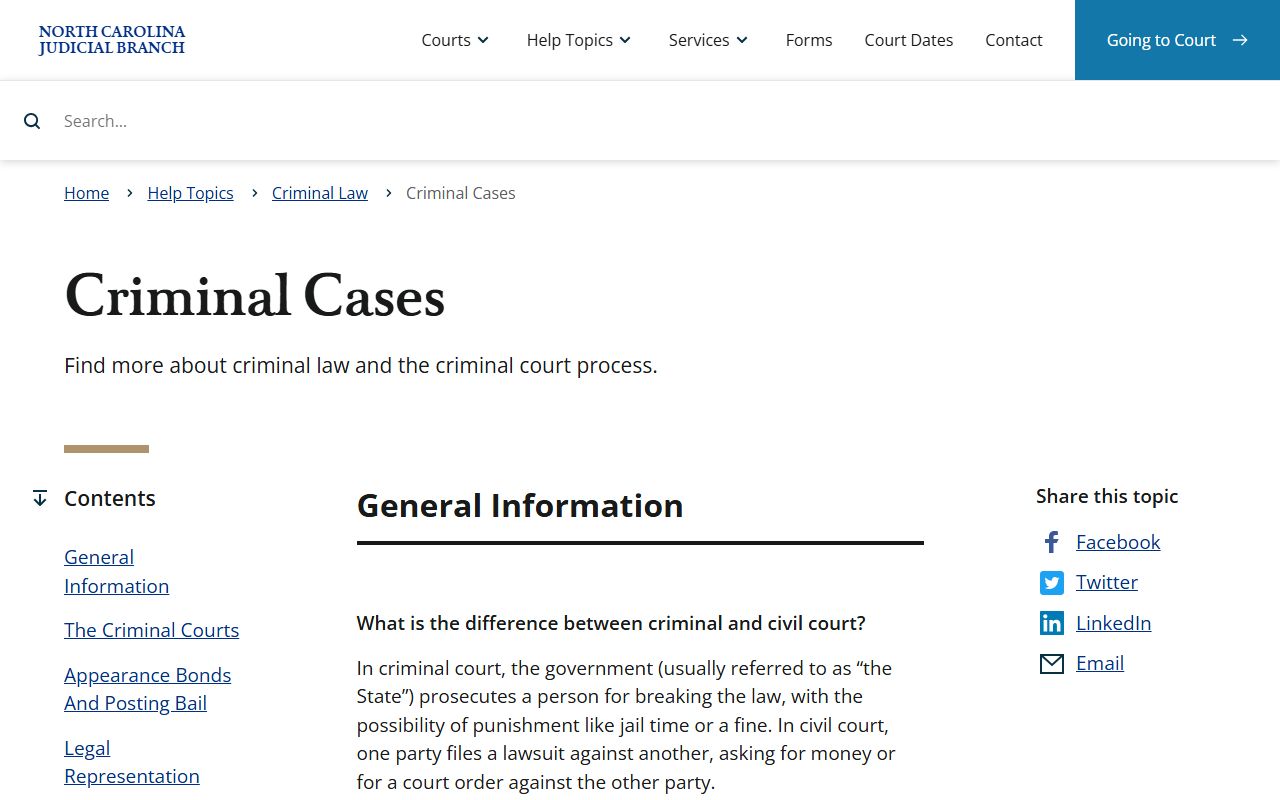
The criminal-case source helps place Alexander County criminal court records in order from offense through court disposition.
Search Alexander County Criminal Court Records
The first public search channel is the North Carolina eCourts Portal. Use Smart Search for case information and Search Hearings for court dates. Alexander County joined eCourts on October 13, 2025, so the current search path is statewide and online, not an Alexander-only database.
- Open Portal and allow JavaScript, cookies, and the required CAPTCHA cycle.
- Search by defendant name, case number, or other available live-app criteria.
- Filter to Alexander County and check whether the matter is in District Court or Superior Court.
- Open the case and read the charge list, events, hearing dates, disposition, judgment, and financial fields.
- Request a certified copy from the Alexander County Clerk of Superior Court when a public online record is not enough.
- Use the clerk rather than Portal alone for background-check accuracy, as Judicial Branch guidance advises.
The statewide prosecutor directory identifies District 32 prosecution through the N.C. Conference of District Attorneys.
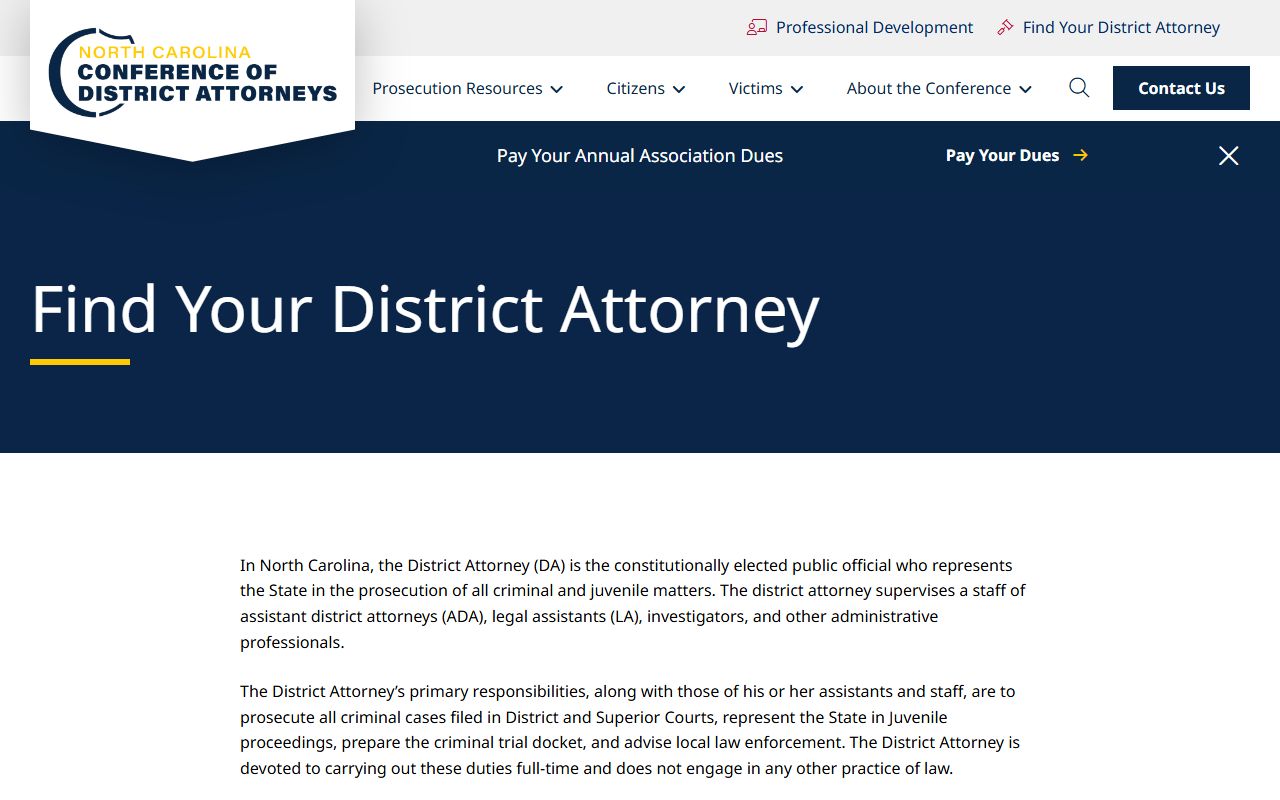
The District Attorney source matters because the prosecutor controls the State's criminal case once charges move through court.
Alexander County Criminal Case Flow
Criminal court records are easiest to read when the case stage is clear. The early case may show an arrest warrant, summons, first appearance, bond, or probable cause activity. Later entries may show indictment, arraignment, pretrial motions, plea negotiations, trial settings, verdict, sentencing, probation, costs, and appeal notices.
Case flow: Charges Filed › First Appearance › Arraignment › Pretrial and Motions › Plea or Trial › Disposition › Sentencing › Appeal or Compliance
| Stage | What Happens |
|---|---|
| Charges filed | The State alleges an offense through a warrant, summons, indictment, information, or other criminal process. |
| First appearance | A judicial official addresses release conditions, counsel, and early scheduling after arrest or charge. |
| Arraignment | The defendant is called on the charge and plea issues are addressed. |
| Pretrial and motions | The record may show motions, continuances, discovery issues, orders, or probable cause events. |
| Plea or trial | The case resolves by plea, bench trial, jury trial, dismissal, or other court action. |
| Disposition and sentencing | The court records the outcome and any sentence, costs, fines, restitution, probation, or jail term. |
What Alexander County Criminal Records Show
A criminal case file can include facts from law enforcement, prosecutor filings, clerk entries, court orders, and sentencing records. Online results may show only a short version. The clerk's file may be needed for full pleadings, orders, and certified copies.
| Field | What It Shows |
|---|---|
| Case number | The official identifier for the criminal case in Alexander County court records. |
| Defendant | Name and party role for the person charged by the State. |
| Court division | District Court or Superior Court, depending on stage and offense level. |
| Charges | Offense name, statute, class, count number, and any amended or dismissed count. |
| Docket entries | Filings, motions, hearings, continuances, orders, pleas, trial events, and sentencing. |
| Plea | The defendant's answer to a charge, if a plea is entered and public. |
| Disposition | Outcome such as guilty, not guilty, dismissed, reduced, or other court action. |
| Sentence | Jail, probation, costs, fines, restitution, or other judgment conditions when public. |
| Redactions | Social Security numbers, protected addresses, juvenile data, medical data, and sealed material. |
Charges vs Convictions
A charge is an accusation. A conviction is an outcome after a guilty plea, verdict, or other qualifying finding. Alexander County criminal court records can show charges that were later dismissed, reduced, amended, or resolved in a way that is not a conviction.
| Charge | Conviction | |
|---|---|---|
| Meaning | The State alleges a crime or offense. | The court records guilt or responsibility by plea, verdict, or judgment. |
| Timing | Appears early in the case and can change. | Appears after resolution of the count or case. |
| Record risk | May be pending, dismissed, or amended. | May trigger sentence, costs, probation, license effects, or collateral consequences. |
| Best verification | Read each count and status. | Read disposition and sentence fields, then confirm with the clerk if needed. |
For the charge path itself, including arrest records and court charges after arrest, see Alexander County arrest records and charges.
District 32 Criminal Case Offices
Prosecutorial District 32 covers Alexander and Iredell counties. The N.C. Conference of District Attorneys directory names Sarah Kirkman as District Attorney for District 32, and the Alexander County Judicial Branch contact directory lists the District Attorney phone as (704) 832-6610. District attorneys represent the State in criminal matters filed in District and Superior Courts and prepare the criminal trial docket.
North Carolina Indigent Defense Services lists Defender District 32 for Alexander and Iredell. The Alexander County office is at 29 West Main Avenue, Taylorsville, NC 28681, with main phone 828-635-5401. IDS announced Seth J. Johnson as the inaugural Chief Public Defender for District 32 in 2024. Public defender files are not public court records, but the office is part of the criminal court process for eligible defendants.
The defender directory appears through North Carolina Indigent Defense Services.
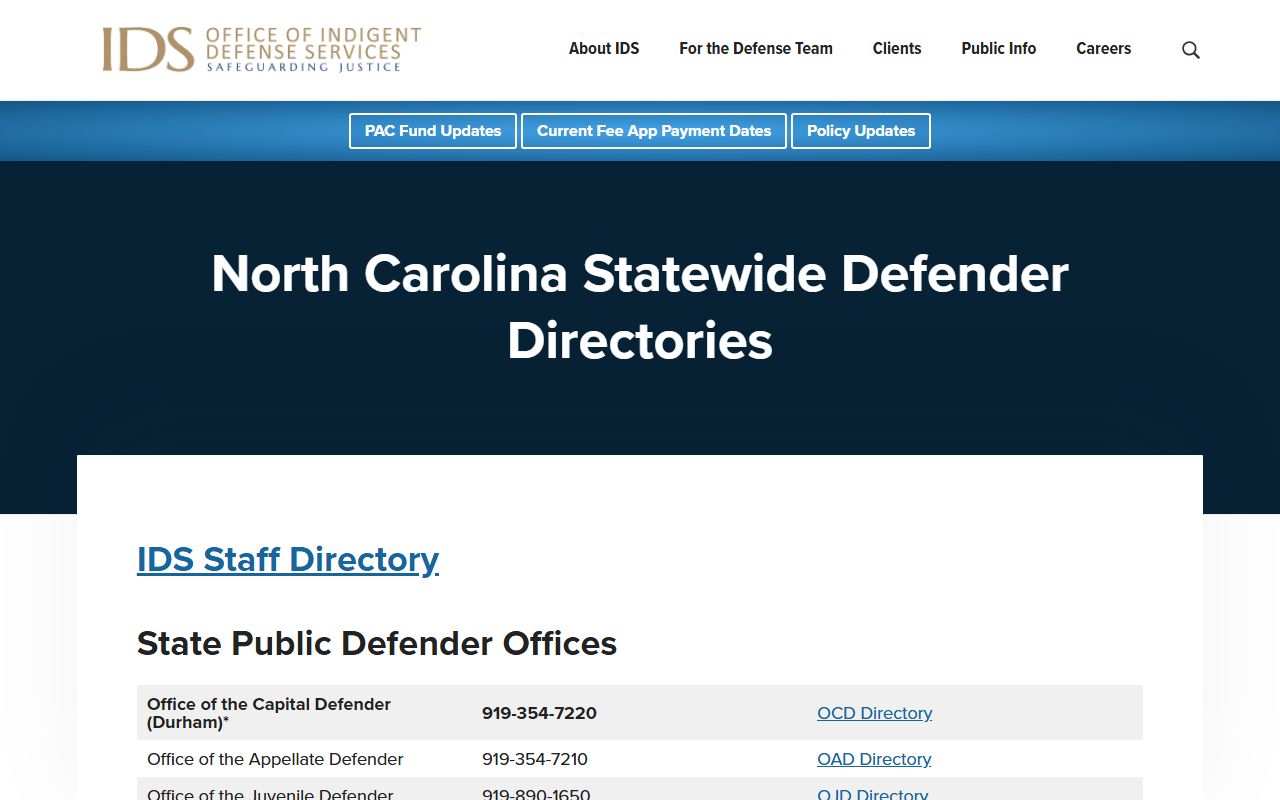
The defender source helps identify the court-system office for indigent defense, not a public case record custodian.
The 2024 appointment is documented in the IDS announcement for District 32.
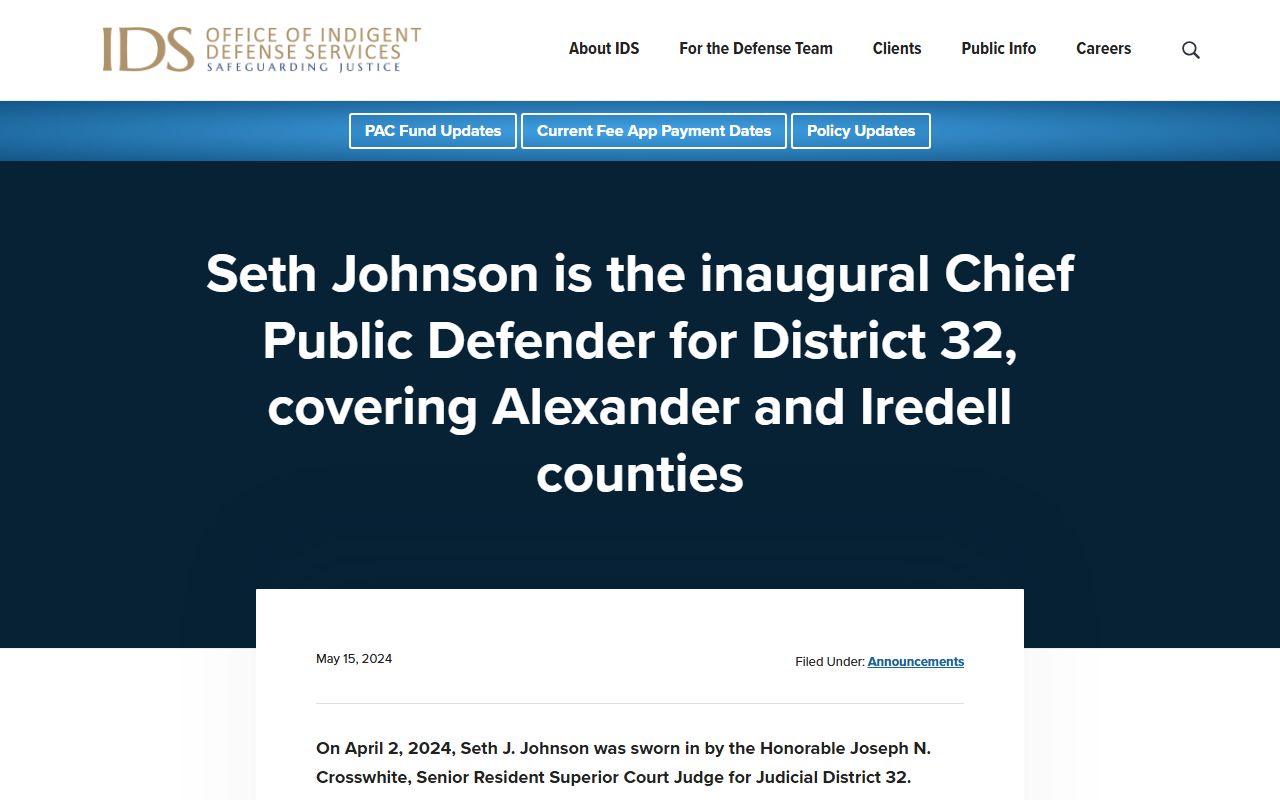
That local District 32 update explains why Alexander and Iredell appear together in criminal court office sources.
Sealed vs Expunged Criminal Records
Restricted criminal records require careful reading. A sealed record is hidden from ordinary public inspection by law or order. An expunged record is removed from public record entries as directed by statute. Neither term means every agency file vanishes for every legal purpose.
| Sealed | Expunged | |
|---|---|---|
| Public visibility | Hidden from ordinary public access by order or law. | Cleared from public record entries as directed by expunction order. |
| Common basis | Confidential case type, protective order, or court order. | Qualifying dismissal, not guilty result, or eligible nonviolent conviction. |
| North Carolina examples | Juvenile and abuse, neglect, dependency records are restricted by Chapter 7B. | G.S. 15A-146 and G.S. 15A-145.5 are key criminal expunction statutes. |
| Practical step | Ask the clerk what access order or form is required. | Check the exact statute and file in the court case if eligible. |
Dismissed and not guilty expunctions are covered by G.S. 15A-146.
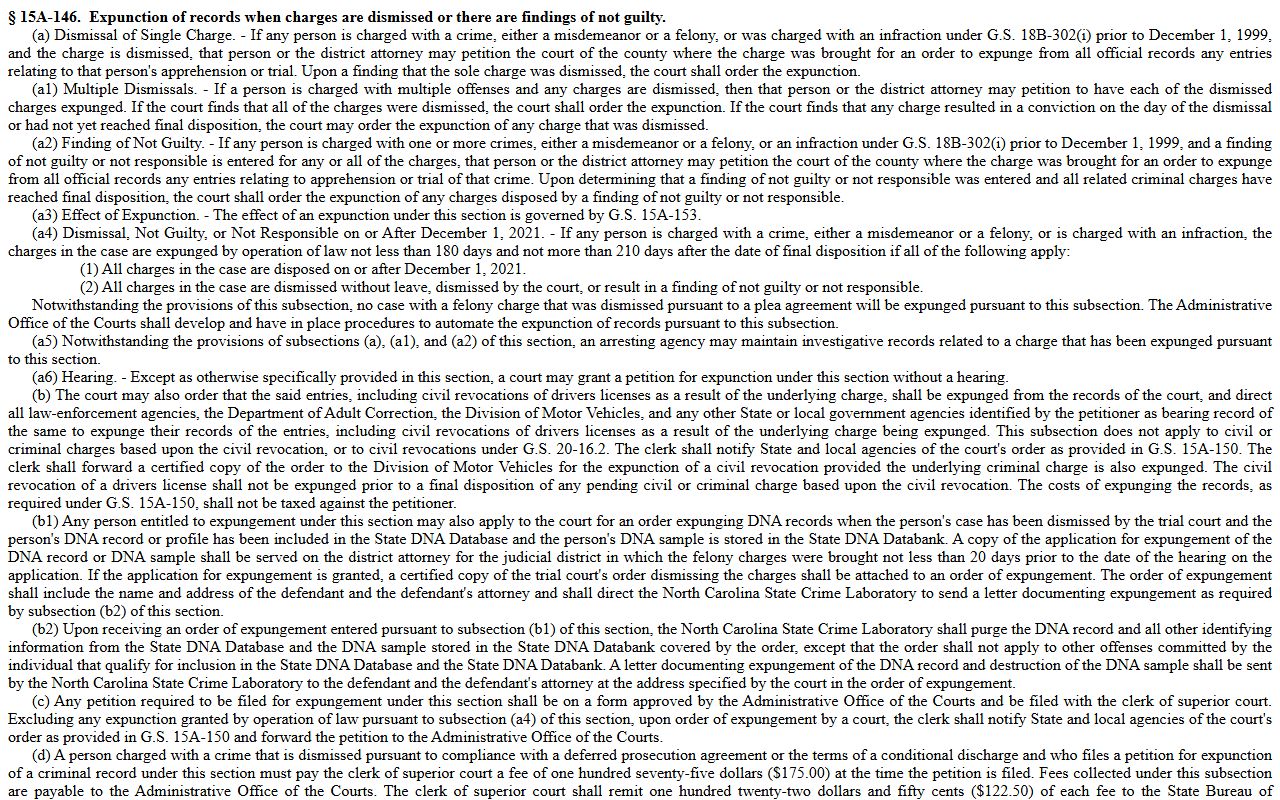
That statute is central when an Alexander County criminal charge ended in dismissal or a not guilty result.
Expunction of certain convictions is addressed by G.S. 15A-145.5.
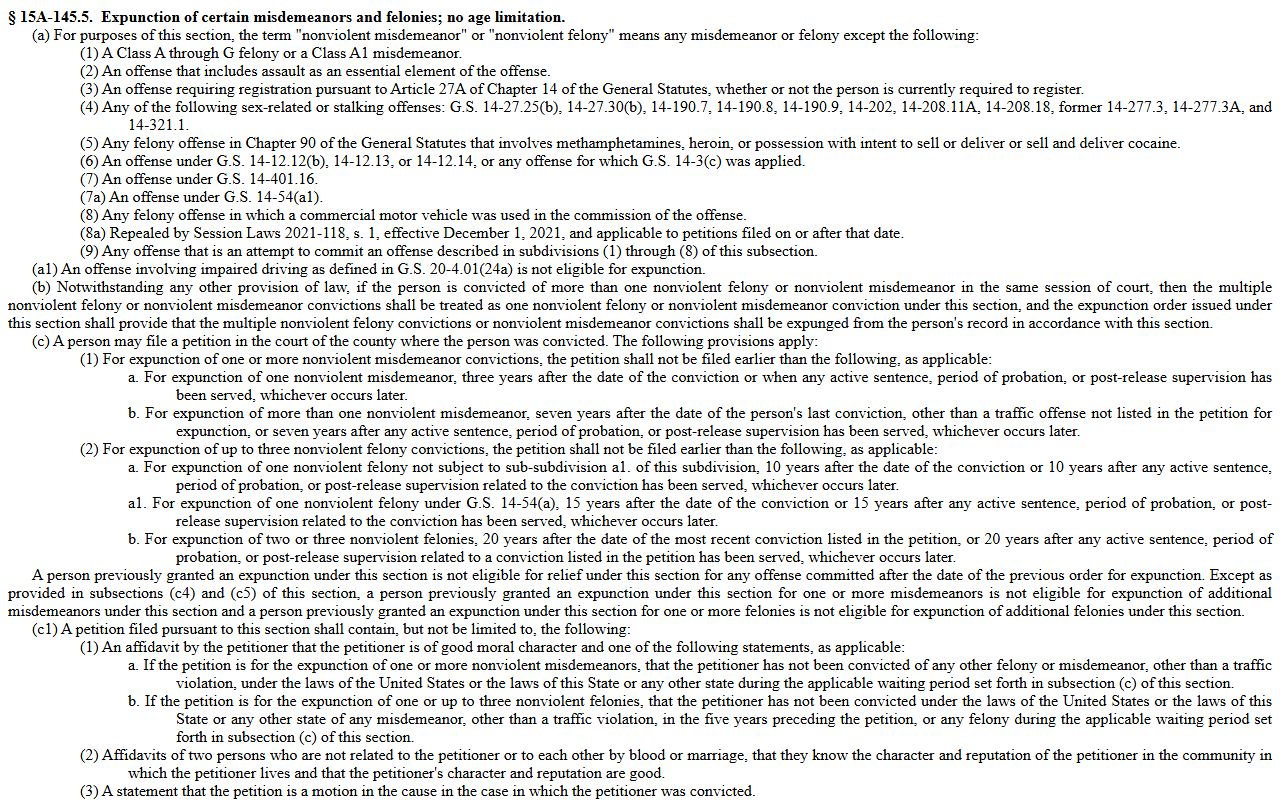
Conviction expunction eligibility is narrower and depends on offense type, timing, and statutory exclusions.
Public Access to Alexander County Criminal Records
North Carolina public records law gives access to public records at reasonable times, but criminal court access is also shaped by court rules, juvenile statutes, sealing orders, and expunction law. Public users may inspect many criminal case records through Portal, public terminals, and clerk-file access, while confidential material is redacted or withheld.
G.S. 132-1 and G.S. 132-6 define broad public records rights. G.S. 132-6.2 allows actual-cost copy charges and special service charges for extensive work. G.S. 7A-109 supports court record keeping and remote access programs. Juvenile court records are governed by G.S. 7B-3000, and abuse, neglect, and dependency records are restricted by G.S. 7B-2901.
Important: Criminal court records can show accusations as well as outcomes, so verify disposition before treating a charge as a conviction.
Restricted Alexander County Criminal Records
Juvenile delinquency, undisciplined juvenile matters, abuse, neglect, dependency proceedings, sealed records, expunged records, protected personal identifiers, confidential medical information, and some confidential recordings are not ordinary public criminal court records. If a record is restricted, the clerk cannot release it merely because the case name is known.
For state offender custody, probation, parole, SAVAN, and registry links, use the N.C. Department of Adult Correction offender searches. That is not a county jail search and not a court case file. It can supplement, but not replace, Alexander County criminal court records.
Note: A public search result should be matched to the exact person, case number, and disposition before use in any serious decision.